
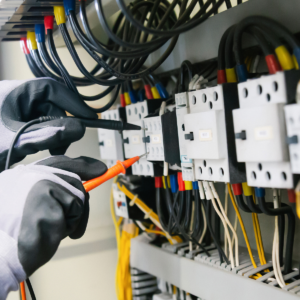
 If a circuit system isn’t labeled correctly, it can be much more than just a minor inconvenience, making a reputable, seasoned industrial electrical subcontractor an essential member of your team. An inexperienced subcontractor team might think that temporary, handwritten stickers suffice, but the truth is that correct labeling can protect your industrial facility from safety disasters and significant OSHA fines. Incorrect electrical labeling threatens safety and finances, while this ‘temporary fix’ forces your maintenance team to waste downtime tracing a single mystery wire. At RUS Industrial, we believe success lies in the details. Because of this philosophy, we prioritize accurate, durable labels to keep your facility safe, productive, and organized. Use this blog to learn more about the three most common pitfalls of electrical labeling and how we avoid them. The three issues include:
- Using non-compliant or hand-written labels
- Inaccurate or outdated information
- Ignoring arc flash hazard labels
The Danger of “Duct Tape” Industrial Electrical Labeling Solutions
The first, and most common, pitfall when it comes to industrial electrical labeling is relying on temporary solutions for essential labeling areas. This is because the layout in an electrical setting can change nearly overnight, leaving huge risks of mislabeling or worse. When this happens, it is typically nearly undetectable, usually only a slight difference from the original layout plan. Because of this, continuously updating the “As-Built” drawing is the best way to keep temporary labels from wreaking havoc on your facility.
Handwritten labels are also a huge risk on their own account, mainly due to the inherent fading that occurs when exposed to industrial heat and constant touching. Many industrial facilities also use powerful chemical cleaners, often in order to maintain the integrity of their final output. Because of this, handwritten labels can easily be wiped away, leaving your team to essentially fly blind during an emergency power restoration service. Additionally, poor handwriting can also make a simple fix confusing and potentially detrimental if an electrical subcontractor is unable to decode the label during an emergency.
In fact, OSHA has specific regulations regarding the typography and content of each individual electrical label, including things such as:
- Standardized color coding
- Legible font size, no smaller than 12 point
- Detailed voltage data
- Arc flash information
- Boundary distance
At RUS Industrial, we follow these rules precisely, ensuring that OSHA regulations are not just met, but exceeded in order to maintain perfect workplace safety. Aside from just following regulations, things like UV resistance and industrial-grade thermal labels can be used to survive the incredibly harsh environment of manufacturing facilities for years to come.
Why Using Inaccurate or Outdated Information is Problematic
In a perfect world, your electrical panels would perfectly match your industrial facilities‘ blueprints, but when it comes to a busy, productive plant, things can change extremely fast and require exact information to match. As an industrial electrical subcontractor, our team at RUS Industrial has seen many facilities where equipment has been moved or transferred, and circuits have been installed, yet the labels are still the same from when the building’s original blueprints were drawn up. Not only can this result in confusion and significantly longer downtimes during electrical repairs, but it can also be extremely dangerous.
This is especially true in the all-too-common scenario of an industrial electrical subcontractor who believes they have cut power, when the label was actually lying to them. Ghost voltage is what many technicians call this specific scenario, which is one of the leading causes of electrical shock in industrial electricity settings.
Troubleshooting time is something that can halt production in a matter of seconds and can be extremely costly. Oftentimes, industrial facilities can lose thousands of dollars every minute of halted production. This downtime can be greatly increased by mislabeled electrical circuits. Outdated labels force your electrical subcontractor to waste hours tracing wires.
In order to mitigate this risk, at RUS Industrial, we recommend labeling audits after every major equipment move or electrical system upgrade. This ensures that your labels match your system and your diagram remains the ultimate source of truth for both fast and safe troubleshooting down the line.
Why Generic Warnings Aren’t Enough for Electrical Systems
Some plant managers might believe that the standard warning signs are enough to protect their team from high-voltage danger. But the unfortunate truth is that in the eyes of an inspector, this is not nearly enough protection. At RUS Industrial, we take our role seriously by ensuring every label communicates vital data and provides workers with the information they need to stay safe. These data points provide crucial information, such as safe standing distances and the specific body armor required to survive an arc flash.
At RUS Industrial, we believe that safety is the most vital element of any industrial facility. Because of that, we always recommend following a stringent “checklist” for all labels in order to accurately convey all necessary information, typically including things such as:
- Incident energy level: Including calories per square centimeter for each piece of equipment.
- Flash protection boundary: For example, unprotected workers must maintain a clearly defined safety distance.
- Minimum PPE required: Labels need to communicate to workers exactly what “arc-related” clothing is necessary.
- Nominal system voltage: Including the specific voltage, and must be visible several feet away.
- Equipment name and ID number: Ensuring that the label matches the machine and is located centrally on the panel, in order for easy location in an instant.
By following this checklist, you can ensure that every worker on your property has the right information to keep them safe and your facility working at full capacity.
How Poor Industrial Electrical Labeling Hits Your Bottom Line
While many plant managers may look at electrical labeling like a simple check box to check, the truth is that working with an industrial electrical subcontractor is essential for ensuring your labeling is accurate and able to do its primary job – keeping your team and facility safe.
The bottom line is that poor electrical labeling can result in a negative impact on your bottom line through one of two avenues. The first is through injury. Poorly labeled high-voltage equipment threatens the lives of your team members and can cause serious harm or death. In order to prevent this from happening, working with an industrial electrical subcontractor is essential for proper and updated labeling during every facility update.
Second, there are significant OSHA fines. These fines can set your company back thousands of dollars and undermine your bottom line. Because of this, working with a team like RUS Industrial is valuable for ensuring every label is up to code and able to protect you from fines and other consequences.
Don’t let poor labeling endanger your team and your facility. Work with an industrial electrical subcontractor and learn how we can help audit your electrical labels and ensure precise accuracy. Contact us today to work with a certified and reliable industrial electrical subcontractor.