
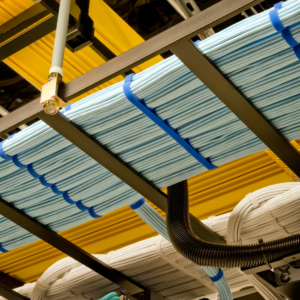
 There are a few things in the Houston industrial scene that are more complex than electrical systems, and an expert industrial electrical subcontractor is integral for preventing the most dangerous problem of all – overheating and hidden fire risks. In most electrical systems, the cable trays are actually the biggest hazard due to the widespread prevalence of overheating within the metal pathways. In many cases, these circuits fail not due to sudden surges, but instead from the intense heat damage that can quickly accumulate on the wiring. Over time, this can lead to catastrophic failures, expensive downtimes, and costly compliance violations. If you need to learn the various reasons that industrial electrical subcontractors audit cable trays to prevent failure, then use this blog as your go-to guide.
The thermal runway might seem like a mystery, but at its core, it’s a simple chemical cycle. The current heating of the insulation starts this cycle, which in turn reduces the integral process of heat distribution. Once this happens, the temperature will continuously rise, which can eventually cause catastrophic failure and dangerous fires down the line.
Science of Industrial Electric Heat
What makes cable tray overheating unique is that it’s not just a simple electrical failure. This is because chronic thermal stress generally causes the slow buildup of damage to them. In order to protect this delicate system, professional industrial electrical subcontractors have two foundational factors to help prevent chronic thermal stress:
- Ampacity
- Derating Factor
Cable ampacity is defined as the maximum current a conductor can continuously carry without exceeding its temperature rating. The biggest factors that can affect this within a circuit are conductor material, insulation type, and ambient temperature. The derating factor is a vital adjustment that is necessary when numerous cables are bundled together within a tray. Because of that, the derating factor is a multiplier that is always applied to a conductor’s standard ampacity rating when cables are confined together in a space such as a cable tray. This is because when cables are bound tightly together, they are not able to cool as well as they can when exposed to open air, meaning that the cable’s safe-carry-capacity must be increased or “derated” to prevent insulation fire and safety risks.
The Double Danger: Thermal Blanketing and Insulation Death
While ampacity and the derating factors are theoretical limits, the very real danger lies in how these confined, bundled-together cables interact with each other. The unfortunate truth is that the way they physically interact is often the very thing that destroys them, and your entire electrical circuit in turn.
This process is typically broken into two parts:
- Thermal blanketing
- Insulation degradation
Thermal blanketing is the convection trap that happens when closely packed cables begin to trap heat, while also eliminating air circulation. A Houston industrial electrical subconductor may refer to this as thermal insulation and convection.
We call the result insulation degradation, sometimes referred to as the “slow kill.” Over time, sustained high temperatures, even if they aren’t extremely hot, permanently damage the PVC or other forms of insulation in the wires. This leads to critical premature brittling, cracking, and eventually short circuits and failure.
What Goes Into Industrial Electrical Fire Risk
Here is where your RUS Industrial electrical subcontractor’s decades of experience come into play – by taking the theory and turning it into precise, effective practice. While understanding the theory of derating and the thermal blanketing effect is essential in understanding how chronic wire overheating starts, many facility managers may be wondering, “What causes these thermal hazards in my facility?” The truth is that there are four distinct, highly preventable mistakes that you may be making that could easily turn a safe electrical system into a dangerously hazardous fire hazard due to chronic overheating. These four “horsemen of cable tray failure” include:
- Overfilling
- Lack of proper segregation
- Environmental and contamination risks
- Compromised installation and maintenance
Overfilling: The Number One Culprit
This is the biggest risk to your electrical system; many inexperienced industrial electrical subcontractors may try to fill a cable tray with even just one too many cables. While this may seem innocent, it instantly violates the strict National Electrical Code guidelines. Overfilling is the most common cause of overheated cables, putting industrial facilities in severe danger.
Lack of Proper Segregation: Power vs. Control
Although overfilling is the most prevalent issue when it comes to overheating your electrical circuit, a lack of proper segregation can severely disrupt the electrical harmony of the tray. This is due to mixing high-amperage power cables with delicate control wiring in the same space, which creates a double failure risk for two primary reasons: high-voltage power cables and electromagnetic interference.
High-voltage power cables perform as a continuous, very hot heat source. On the other hand, the electromagnetic interference from power lines can quickly harm sensitive control or data management cables. While this isn’t a specific thermal risk, it is a quick, silent way to break down a facility.
Environmental and Contaminant Risks
Next, no matter if a cable tray is perfectly filled and spaced, an electrical system’s atmosphere can quickly ruin the thermal performance. Many industrial facilities face significant issues, including warm temperatures, high humidity, and the unfortunate accumulation of dust, grime, and types of oil. All of which can lend a hand in developing a thermal jacket around the cables, which accelerates the cable breakdown and increases the industrial fire risk. Because of this, working with professional industrial electrical subcontractors from RUS Industrial in Houston is imperative for recommending a safe, clean facility upkeep ritual.
Compromised Installation and Maintenance
The last risk to your cable system is also the most unsuspecting, fast-spreading risk. This is the quality of the physical installation and proactive maintenance. Industrial electrical subcontractors have highly selective training that is imperative for things such as accurate installation and rigorous upkeep, both of which are non-negotiable for sensitive electrical systems in industrial facilities.
How an Industrial Electrical Subcontractor Designs Thermal Solutions
Identifying risks is something that your industrial electrical subcontractor can play an integral role in. The other side of this battle is instilling reliable, cost-effective, and safe solutions for your industrial facilities’ cable systems. The most important aspect of this process has four key components:
- Strategic tray selection: Your industrial electrical subcontractor at RUS Industrial can help select a tray from the three main categories: ladder type, trough type, or ventilated bottom.
- Placement and clearance: Making sure there is plenty of space between structural walls and ceilings to create maximum air flow.
- Precise derating and cable sizing: Sometimes, the details are the most important factor. Because of this, professional calculations are integral in creating a reliable system.
- Proactive monitoring and inspection technology: By establishing a proactive, predictive maintenance routine, you can cut back on reactive maintenance and expensive emergency repairs.
Industrial facilities complete some of the most heavy-hitting jobs in the world; however, many don’t realize how sensitive their electrical circuits are and how precise an industrial electrical subcontractor’s role truly is. If you want to improve your system’s overall safety and eliminate fire hazards due to cable misfires, then working with RUS Industrial is essential. Contact us today for a free estimate on industrial electrical subcontractor services in Houston.